
Custom Card Printing Guides
Custom Promotional Card Printing for Marketing Campaigns: Formats and Production Tips
Table of Contents
- How to Choose a Promotional Card Format
- Materials and Finishes for Marketing Cards
- Artwork and Specification Planning
- Custom Promotional Card Printing Production Process
- Sampling, Quality Control, and Approval
- Packaging and International Shipping
- Practical Planning Summary
Custom promotional card printing helps brands deliver compact, measurable marketing materials for launches, retail promotions, events, loyalty programs, and direct-mail campaigns. The best result depends on matching the card format, material, finish, artwork, quantity, and packaging to the campaign objective.
How to Choose a Promotional Card Format
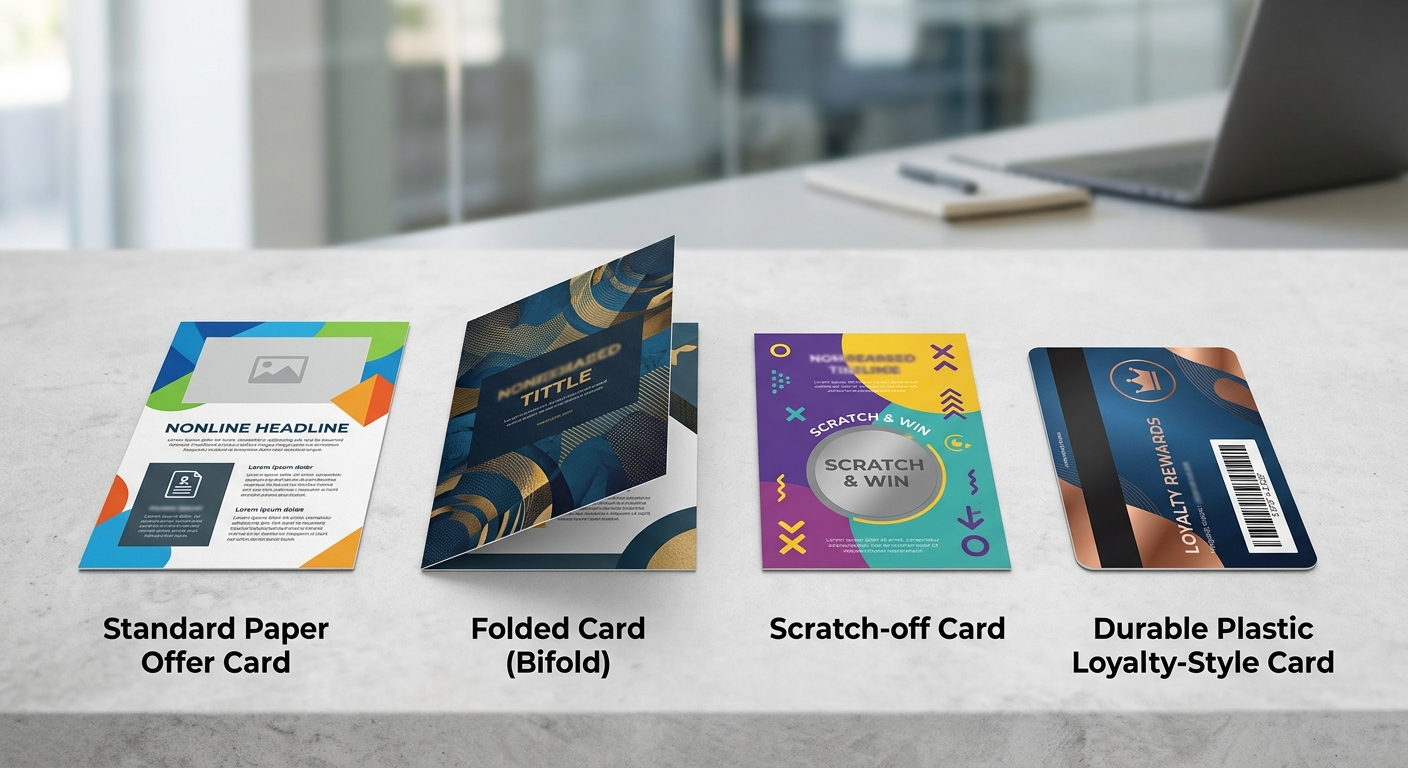
Custom promotional card printing is most effective when the card format supports the campaign action you want the recipient to take. A simple printed card can communicate an offer, while a scratch card can reveal a code, and a loyalty or membership card can support repeated customer engagement.
Before requesting a quotation, define the campaign objective, distribution method, expected handling, and required response. These decisions help a manufacturer recommend a suitable card construction instead of quoting an unsuitable specification.
Common promotional card formats
- Standard promotional cards: Suitable for discount messages, QR codes, product launches, event invitations, retail inserts, and direct mail.
- Folded or shaped cards: Useful when the campaign needs more copy, a special visual identity, or a format that stands out from ordinary handouts.
- Scratch-off cards: Designed to conceal a prize, coupon, access code, or promotional message until the recipient scratches the covered area. See our custom promotional scratch cards page for a related format.
- Plastic promotional cards: PVC can be considered when the card will be reused for loyalty, membership, access, or long-term customer identification. Material selection should reflect use rather than appearance alone.
- Game and collectible cards: Appropriate for campaigns that use participation, rewards, characters, or product education to encourage repeat interaction.
For one-time distribution, paper stock is often a practical starting point. For repeated handling or wallet use, a plastic construction may provide better resistance. Specifications, MOQ, price, and lead time depend on the card type, dimensions, material, quantity, finishing, packaging, and shipping requirements.
Materials and Finishes for Marketing Cards
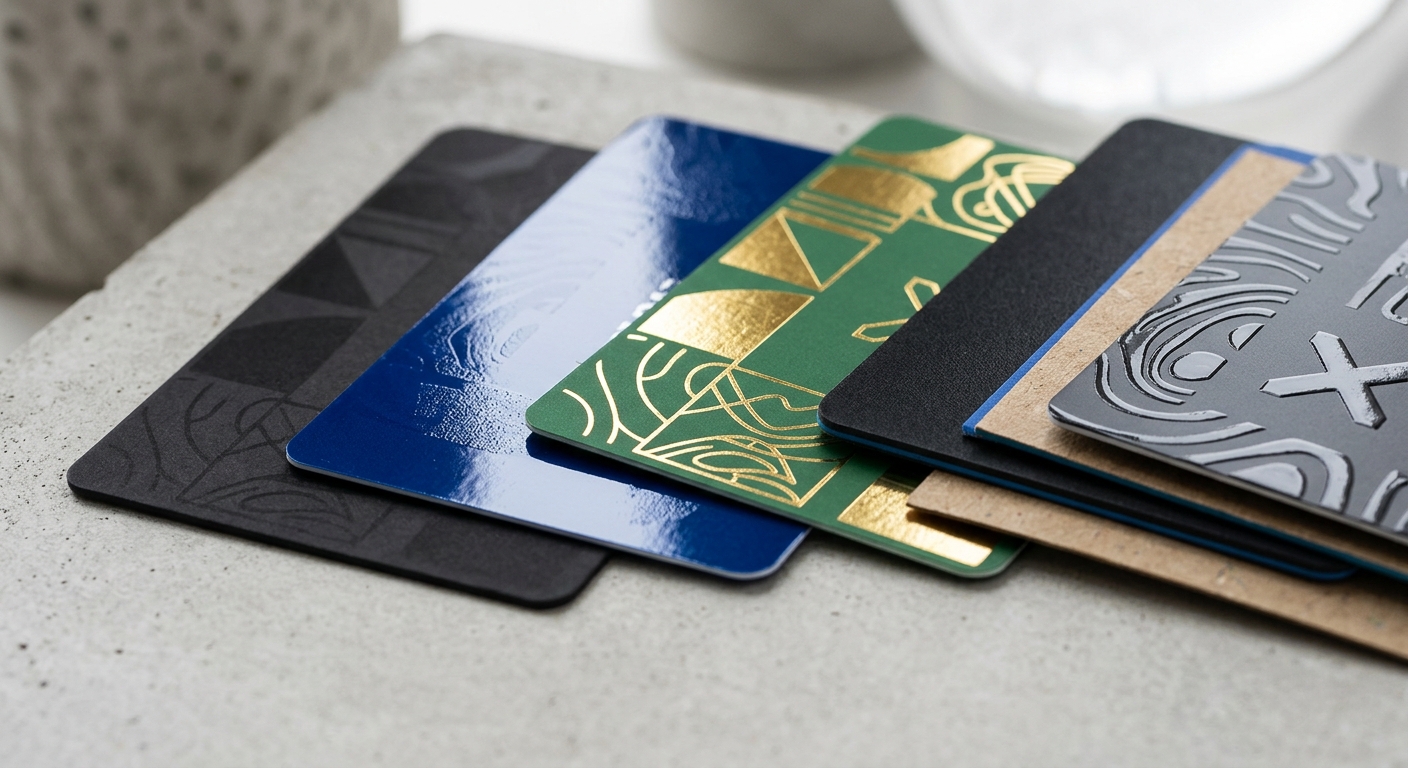
Material means the substrate used to make the card, while finish means the protective or decorative treatment applied to its surface. Both influence print appearance, durability, writing performance, and perceived value.
Paper and board options
Paper and paperboard are commonly selected for flyers, inserts, coupons, event cards, and short-term promotions. Important variables include thickness, stiffness, whiteness, coating, and whether the recipient needs to write on the card. A coated surface can make images and solid colors appear sharper, while an uncoated surface may be more suitable for handwriting.
Plastic options
PVC cards are designed for more durable applications, including loyalty and membership programs. If the project includes electronic functions, such as a chip or contactless element, those requirements must be discussed before artwork and production planning. Our guide to custom PVC card printing explains considerations for durable program cards.
Surface finishes
- Gloss lamination: Creates a reflective surface and can support vivid visual presentation.
- Matte lamination: Reduces glare and gives the card a softer, more restrained appearance.
- Spot UV: Applies a localized glossy effect to selected text, logos, or graphics.
- Foil stamping: Adds a metallic or specialty accent to approved artwork areas.
- Embossing or debossing: Creates a raised or recessed tactile detail.
- Rounded corners and die cutting: Change the physical profile and may require additional production planning.
Finishes should support the campaign rather than obscure essential information. For example, excessive gloss can make a QR code harder to scan under strong light, and heavy decoration may not be appropriate for a card intended for handwriting. Confirm the finish, color reference, and functional requirements during quotation and sampling.
Artwork and Specification Planning

Production problems often begin with incomplete specifications rather than with the press itself. Prepare a concise technical brief that gives the manufacturer enough information to review artwork and recommend a workable construction.
Include these details in the brief
- Finished card size and whether the design is single-sided or double-sided.
- Material type, thickness, color requirements, and any special structural features.
- Color mode and print method requested, with brand references where color matching matters.
- Surface finish, corner style, die-cut shape, perforation, or folding requirements.
- Variable data, sequential numbering, QR codes, barcodes, or unique promotional codes.
- Card quantity, number of artwork versions, and whether each version has a different language or offer.
- Packaging format, carton labeling, pallet requirements, and destination country.
Artwork should include the correct bleed and safe area according to the supplier’s file requirements. Bleed is extra image area that extends beyond the trim line; the safe area keeps important text and logos away from the cut edge. QR codes and barcodes should be tested from a physical proof when they are central to the campaign.
For cards with scratch panels, variable codes, or multiple versions, provide a clear data file and approval method. The buyer and factory should agree on how codes are checked, how version quantities are separated, and what information appears on carton labels.
Custom Promotional Card Printing Production Process
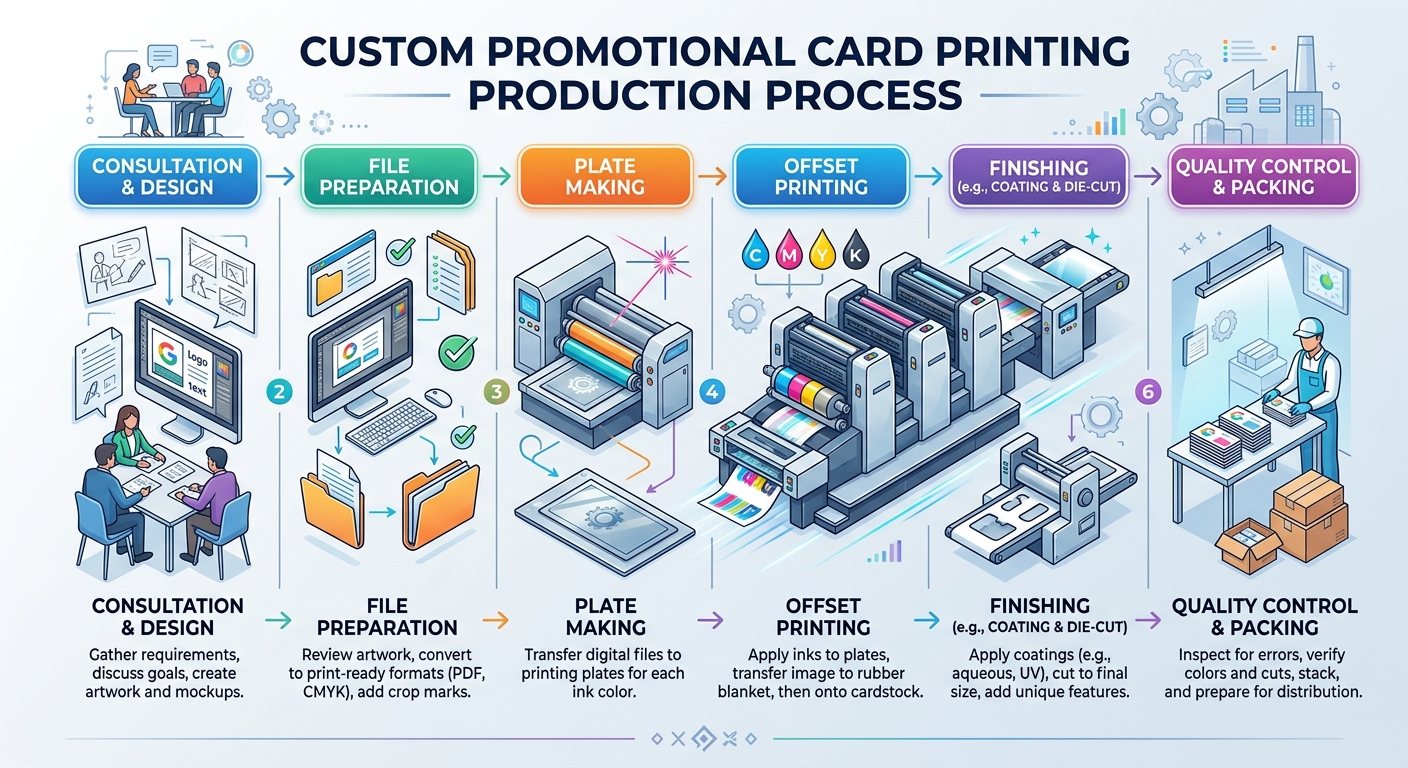
A controlled production workflow reduces avoidable changes between quotation, proofing, manufacturing, and export preparation. A typical project follows these steps:
- Requirement review: The buyer shares card type, size, material, quantity, finish, artwork, packaging, and destination details.
- Artwork review: The factory checks dimensions, bleed, color setup, text, images, codes, and special effects. Any unclear point should be resolved before approval.
- Quotation and production plan: The quotation should identify the agreed specification, artwork versions, packaging assumptions, and any sample or tooling requirements.
- Sampling: A digital, printed, or production sample may be used depending on the project. Sample type should be agreed because each provides different information about color, material, structure, or finish.
- Bulk production: After approval, printing, coating or lamination, cutting, special effects, sorting, and packing are coordinated according to the confirmed specification.
- Inspection and packing: Finished cards are checked against approved requirements before export packing and shipment.
For large campaigns, separate artwork versions should be identified with file names and a version-control sheet. This is particularly important when multiple markets, languages, discount values, or campaign periods are involved.
Sampling, Quality Control, and Approval
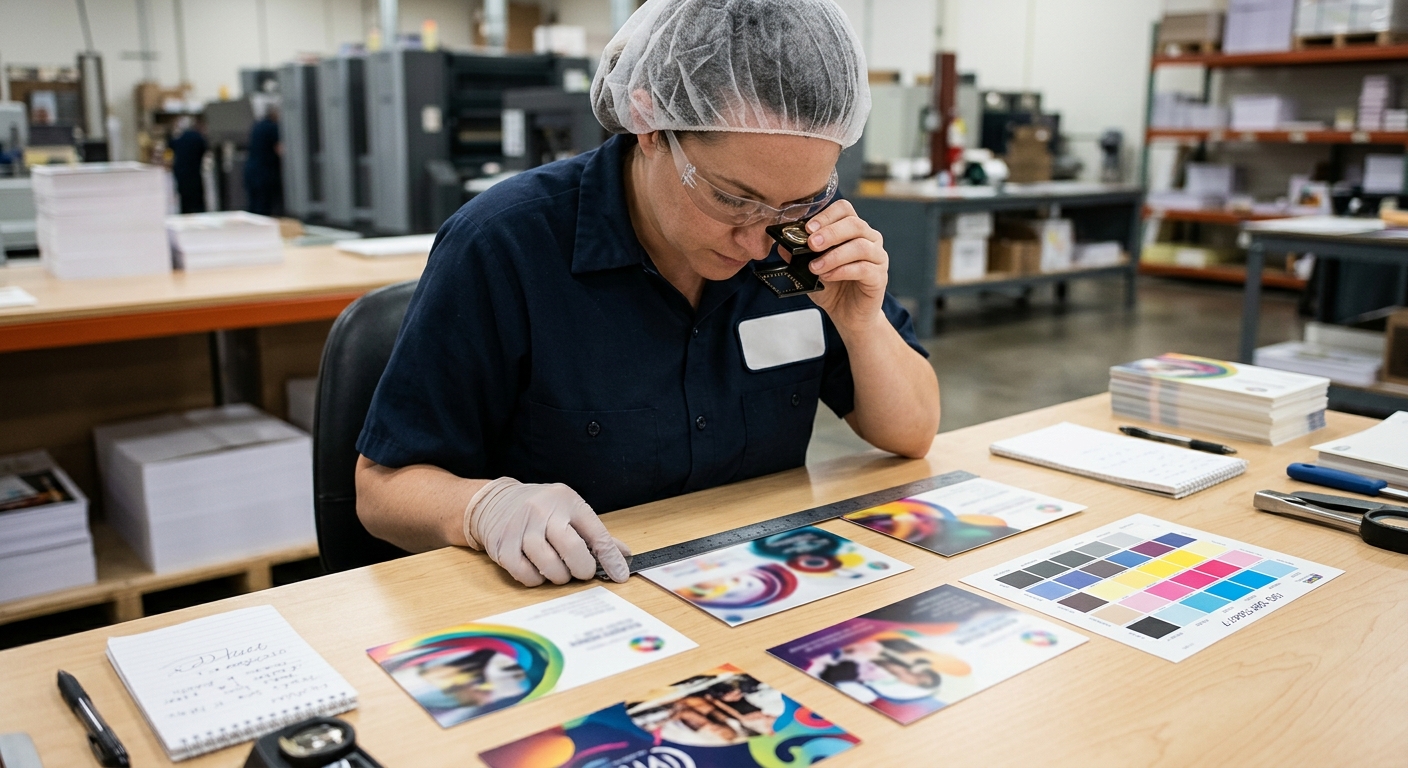
Sampling gives the buyer an opportunity to confirm the physical result before committing to bulk production. It should not be treated as an optional formality when the campaign depends on color accuracy, tactile effects, precise cutting, variable information, or a specific card feel.
What to review on a sample
- Finished size, thickness, weight, corner radius, and overall stiffness.
- Color balance, image sharpness, small text, logo placement, and print registration.
- Surface feel, gloss level, lamination adhesion, foil coverage, and spot effects.
- Cutting accuracy, folding direction, perforations, and die-cut edges.
- QR-code or barcode readability and the correct display of promotional information.
- Scratch-panel coverage, reveal performance, and code placement when applicable.
A factory quality-control system may include incoming material checks, artwork and prepress checks, in-process inspection, finishing inspection, quantity verification, final sampling, and export-packing checks. The exact inspection plan should be agreed according to the project and risk level.
Use one approved sample or signed proof as the reference for production. If the buyer changes artwork, material, finish, or quantity after approval, the effect on cost, timing, and consistency should be reviewed before the change is accepted. See our practical guide to planning a profitable card printing MOQ when balancing test quantities with campaign inventory.
Packaging and International Shipping
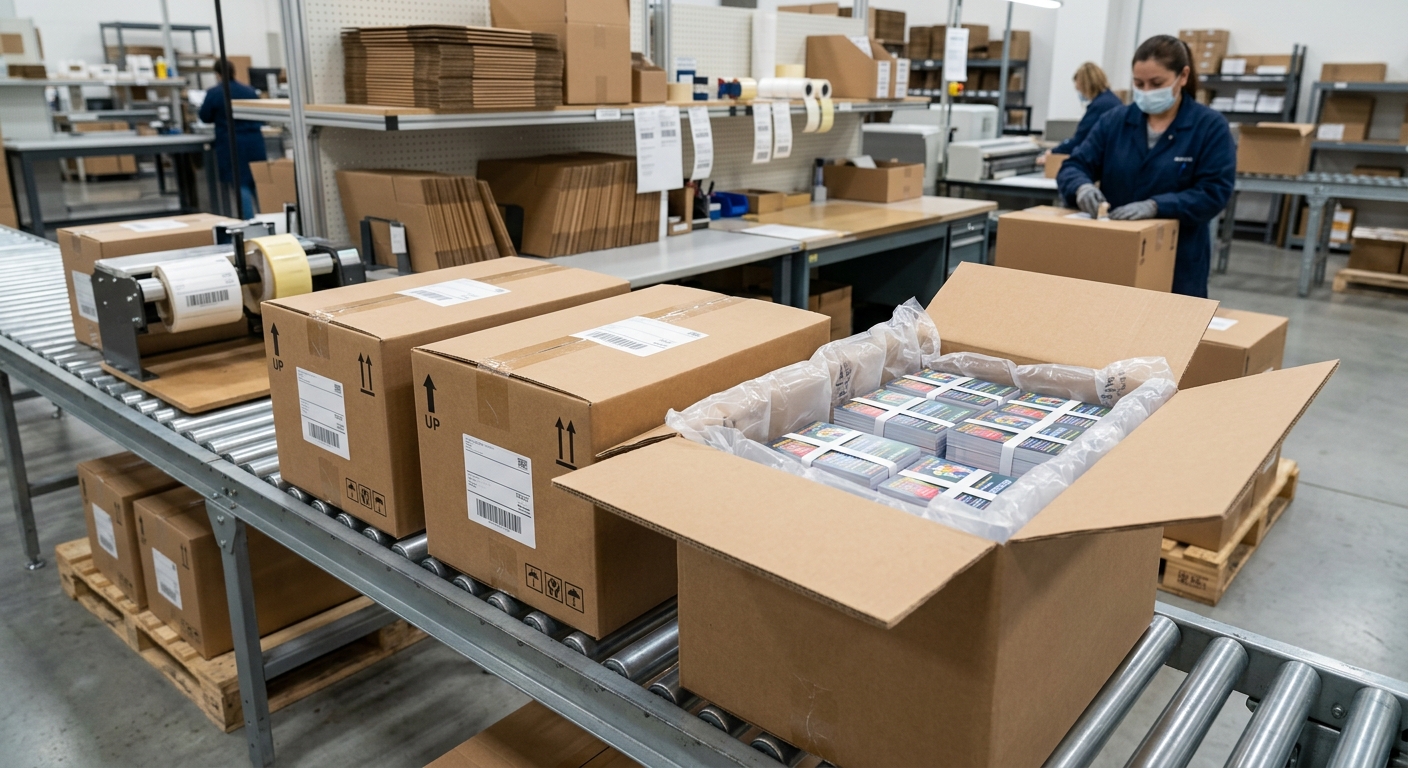
Promotional cards are often shipped in large quantities, so packaging affects protection, handling, counting, storage, and distribution. Define the packing method before production rather than treating it as an afterthought.
Packaging points to confirm
- Quantity per inner bundle, bag, or carton.
- Whether different artwork versions must remain separated and clearly labeled.
- Carton dimensions, gross weight, carton marks, and destination requirements.
- Whether cards need retail-ready packaging, envelopes, inserts, or display components.
- Protection against moisture, edge damage, crushing, and movement during transit.
For premium campaigns or products sold through retail, packaging may include tuck boxes, rigid boxes, or magnetic cases. The appropriate option depends on product position, protection needs, budget, order quantity, and shipping plan. Review the custom card packaging comparison before selecting a box format.
International shipping arrangements depend on destination, order volume, packaging dimensions, trade terms, and the selected transport method. A manufacturer can coordinate export packing and worldwide shipping support, but the buyer should confirm the final destination, import requirements, consignee information, and documentation needs early.
Practical Planning Summary for Custom Promotional Card Printing
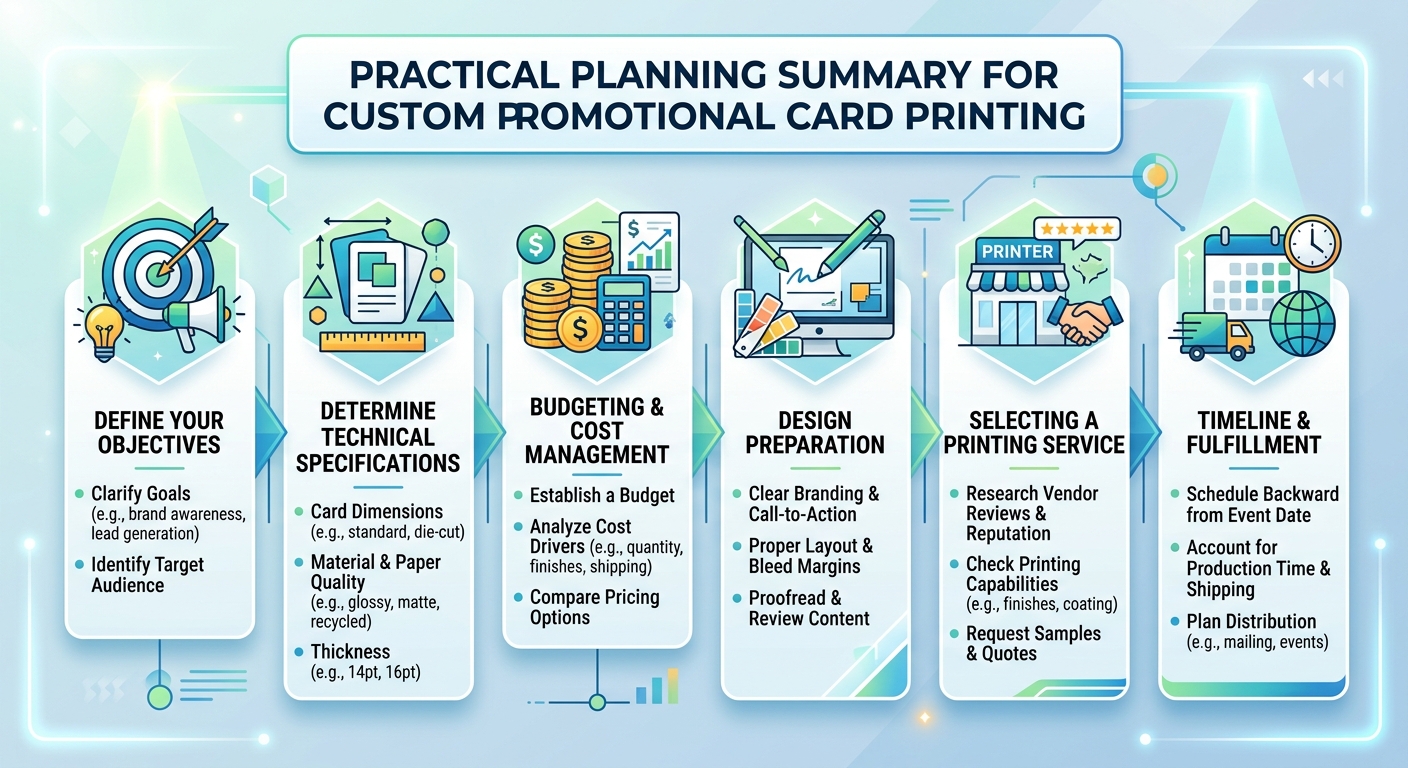
Successful custom promotional card printing begins with a clear connection between the campaign goal and the physical card. Select paper for efficient one-time distribution, plastic for repeated handling, and scratch-off or specialty formats when controlled interaction is part of the promotion.
Before placing an order, prepare the artwork, confirm the finished dimensions and material, select functional finishes, approve a suitable sample, and define version control. Discuss MOQ, price, lead time, packaging, quality checks, and shipping requirements with the manufacturer because these specifications depend on the project rather than a universal standard.
For B2B campaigns, a detailed brief and approved reference sample are practical tools for reducing misunderstandings. They also help the factory coordinate artwork review, sampling, bulk production, quality control, export packing, and worldwide shipment in a more predictable way.
Request a Promotional Card Printing Recommendation
Share your card type, finished size, material, quantity, finish, artwork versions, and packaging requirements with YBJ Cards Printing. Our team can review the project details and prepare a tailored recommendation and quotation for your marketing campaign.
Tags
Keep Reading
Related Articles
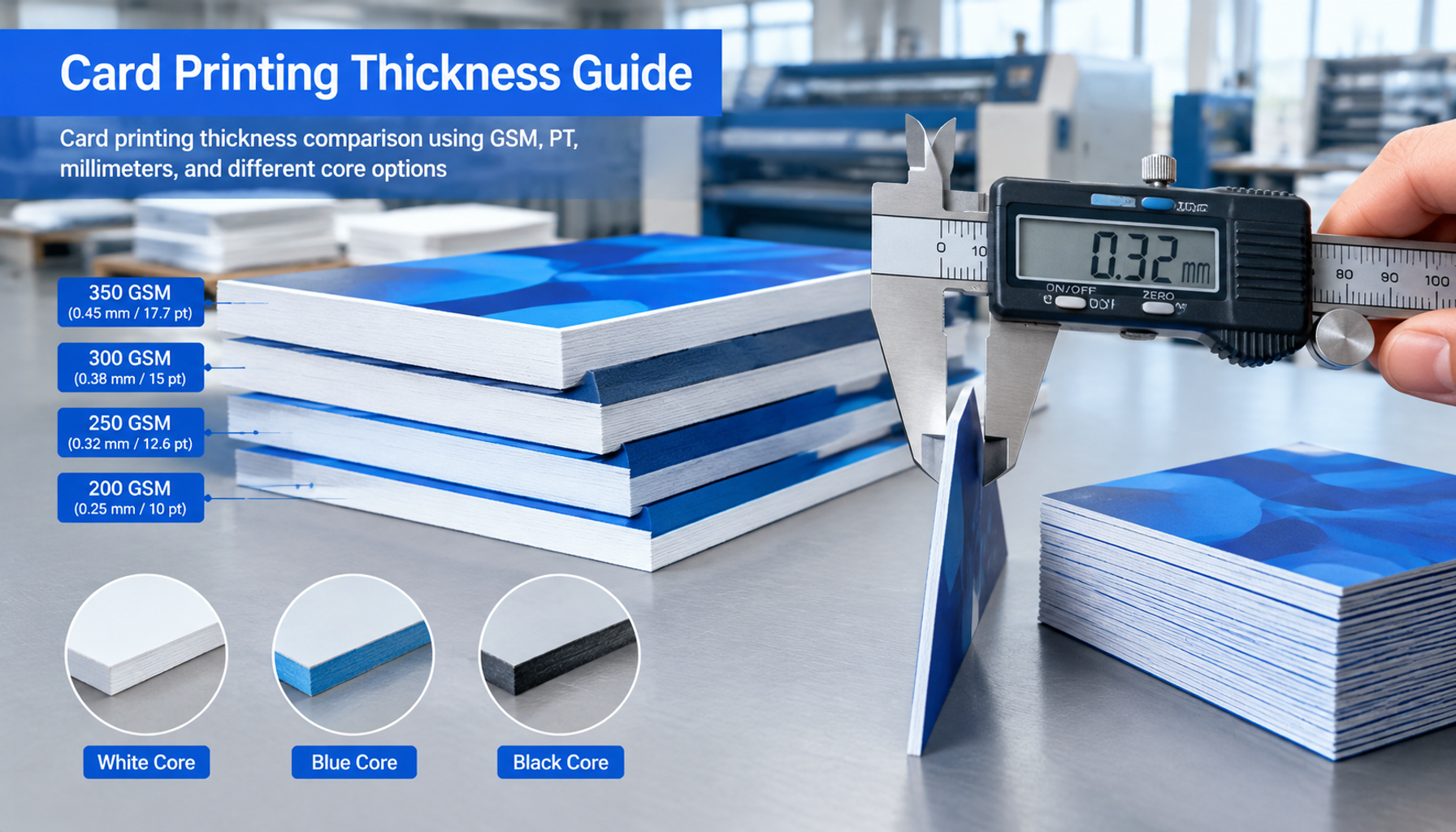
Card Printing Thickness: GSM, PT, and Core Selection Guide
A practical B2B guide to comparing GSM, PT, millimeters, paperboard cores, and plastic constructions when specifying custom cards.
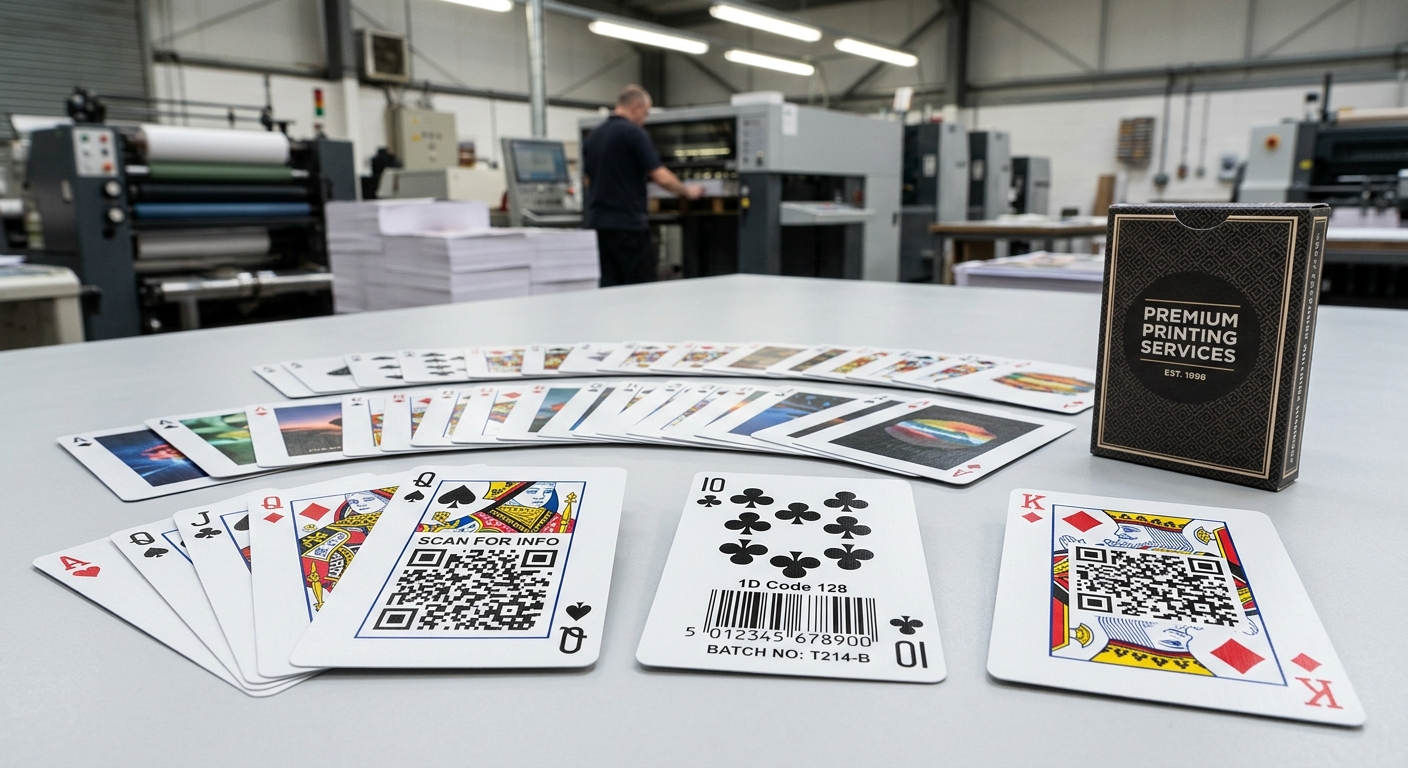
How to Print Custom Cards with QR Codes and Barcodes in a Deck
Printing scannable codes on a custom card deck requires coordination between code generation, database management, artwork preparation, print production, finishing, and scan testing. This practical guide explains how B2B buyers can prepare reliable QR codes and barcodes for static or variable-data card decks.

Custom Greeting Card Printing Wholesale: Sizes, Finishes, and Packaging Guide
Custom greeting card printing wholesale requires coordinated decisions about card size, paper stock, folding, finishes, envelopes, packaging, and shipping. This guide helps publishers, retailers, agencies, and gift brands prepare a practical production brief and reduce avoidable sampling or packing issues.
Fast Quote Support
Ready to Start Your Custom Card Project?
Send us your product type, size, material, quantity, and packaging requirements. Our team will reply within 24 hours with production suggestions, sampling options, and a competitive quote. No setup fees.