
Custom Card Printing Guides
Custom Card Printing Manufacturer: What B2B Buyers Need to Know
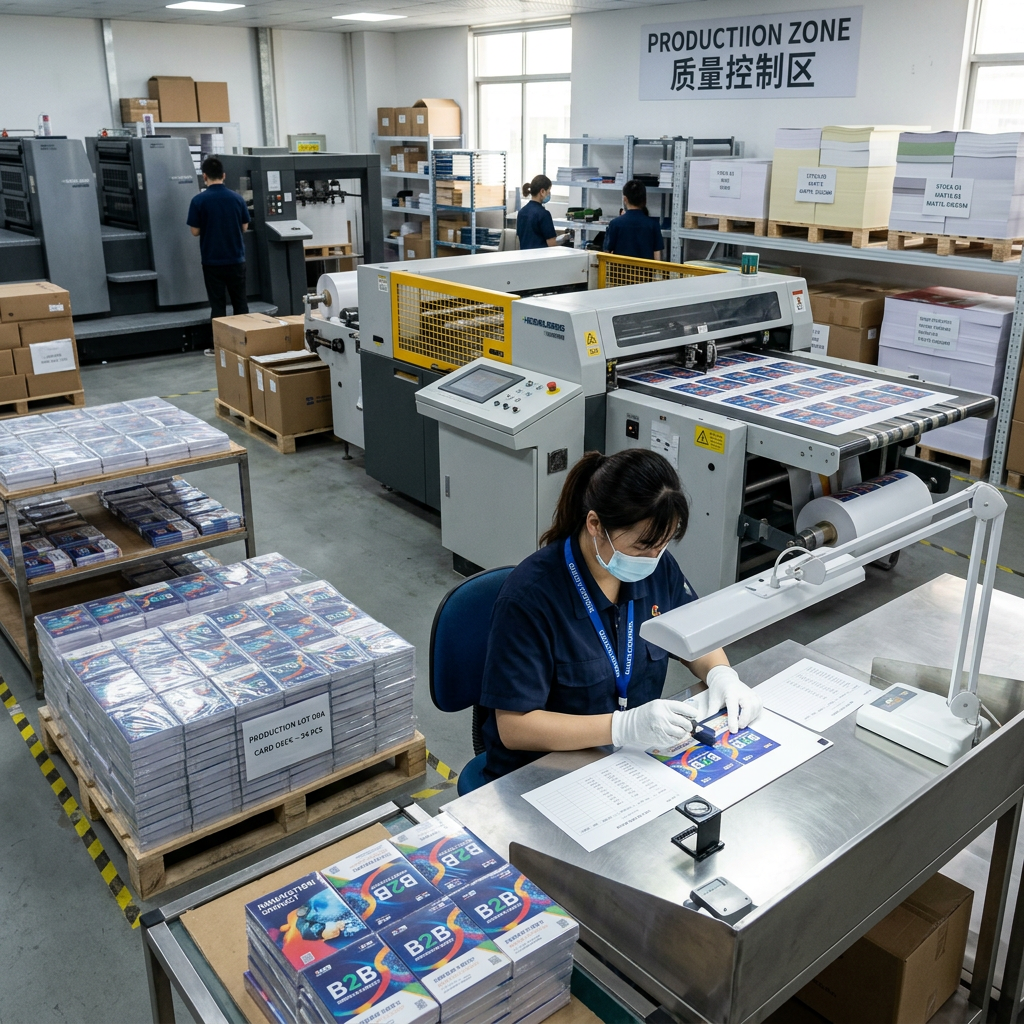
Table of Contents
- What Should B2B Buyers Expect from a Manufacturer?
- Essential Custom Card Printing Terms
- Specifications to Confirm Before Requesting a Quote
- How Materials and Finishes Affect the Result
- MOQ and Price Factors
- Sampling and Artwork Review
- Bulk Production Workflow
- Quality Control for Custom Printed Cards
- Packaging and International Shipping
- Questions to Ask a Potential Supplier
- Choosing a Custom Card Printing Manufacturer
A practical guide to selecting and working with a custom card printing manufacturer, covering specifications, quotations, samples, production controls, packaging, and international shipping.
What Should B2B Buyers Expect from a Custom Card Printing Manufacturer?
A reliable custom card printing manufacturer should do more than place artwork on paper. For a B2B order, the manufacturer should help confirm specifications, review print files, produce an appropriate sample, control bulk production, inspect finished cards, prepare export packaging, and coordinate shipment.
The main buyer question is therefore not simply, “Can this factory print my design?” It is, “Can this factory reproduce the approved design consistently at the required quantity and package it for the intended market?” Buyers should evaluate technical communication, manufacturing controls, sampling options, tolerance management, packing plans, and export experience before placing a bulk order.
YBJ Cards Printing is a China-based manufacturer with more than 20 years of card production experience. Its project workflow supports artwork review, sampling, bulk manufacturing, seven-stage quality control, export packing, and worldwide shipping. Buyers can begin by reviewing the company’s custom card printing capabilities.
Specifications, minimum order quantity, price, and lead time depend on the card structure, materials, dimensions, quantity, finishing processes, packaging, and delivery requirements. A detailed inquiry is more useful than a request for a general per-piece price.
Essential Custom Card Printing Terms
Understanding common production terms helps buyers compare quotations accurately and avoid ambiguous specifications.
- Bleed: Printed artwork extending beyond the final cut line. It prevents unprinted edges when minor cutting movement occurs.
- Trim size: The intended dimensions of the finished card after cutting.
- Safe area: The inner zone where important text, borders, and logos should remain to reduce the risk of trimming them.
- GSM: Grams per square metre, a measure of paper weight. It does not describe stiffness by itself because thickness and construction also matter.
- Caliper: The physical thickness of a card or sheet, normally stated in millimetres or microns.
- Color mode: The system used to prepare color data. Commercial print files are commonly prepared for CMYK output, while certain brand colors may require separate handling.
- Imposition: Arranging multiple card faces on a larger press sheet for efficient printing and finishing.
- Registration: The alignment of printed colors, cutting, foil, embossing, or other processes.
- Finish: A surface or decorative treatment such as lamination, varnish, foil, embossing, or spot gloss.
- MOQ: Minimum order quantity, meaning the smallest practical order accepted for a particular specification or process.
These terms should appear consistently in the quotation, sample approval record, purchase order, and production specification.
Specifications to Confirm Before Requesting a Quote
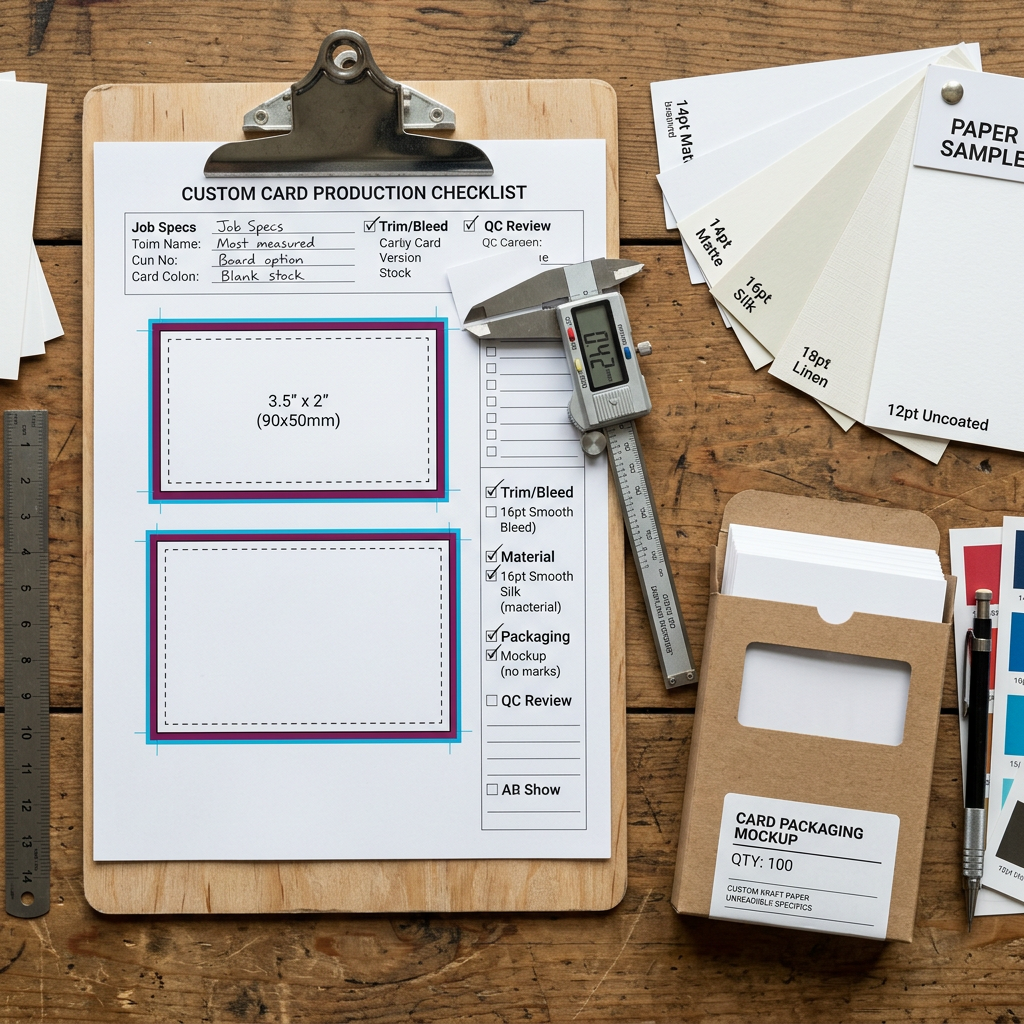
A manufacturer can prepare a meaningful quotation only when the project is sufficiently defined. Buyers should provide the following information:
- Card application: For example, game cards, educational cards, promotional cards, membership cards, flash cards, or product inserts.
- Finished size and shape: Include dimensions, orientation, corner radius, and any custom die-cut profile.
- Card count: State the number of cards in each deck or set and whether cards have unique faces.
- Material: Identify the preferred paperboard, coated stock, synthetic substrate, or other suitable material.
- Thickness or weight: Provide a target caliper or GSM where relevant.
- Printing: Confirm whether printing is single-sided or double-sided and whether color requirements differ between the front and back.
- Surface treatment: Specify lamination, varnish, foil, embossing, spot effects, or other requested finishes.
- Quantity: Give the total number of decks, sets, pieces, or assortments.
- Sorting and collation: Explain the required sequence and whether sets need wrapping, banding, or individual packing.
- Packaging: Define the retail box, pouch, wrap, insert, master carton, barcode label, and shipping mark requirements.
- Destination: State the destination country, city, postal code, and preferred trade term if already known.
A reference sample can help explain tactile expectations, but it should not replace written specifications. Measurable requirements are easier to quote, sample, inspect, and reproduce.
How Materials and Finishes Affect the Result
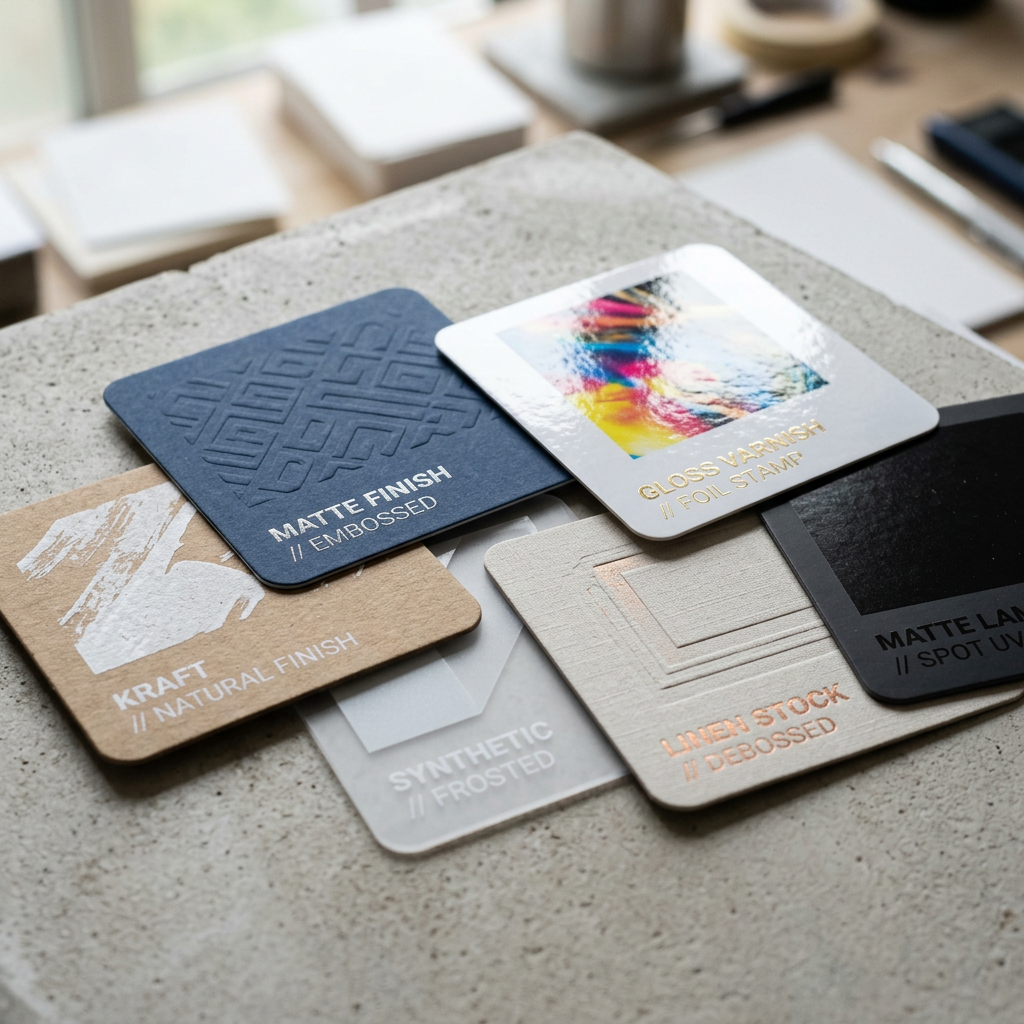
Material selection affects stiffness, opacity, surface feel, print appearance, durability, handling, and cost. A heavier GSM does not automatically make one card better than another. Stock composition, coating, grain direction, lamination, and finished thickness also influence performance.
Common paper-based options can suit many promotional, educational, and game applications. Synthetic materials may be considered when moisture resistance or repeated handling is important, but they can change print behavior, finishing compatibility, and cost. The correct choice depends on the card’s intended use rather than a single universal specification.
Finishes add visual or tactile effects, but each process introduces trade-offs:
- Varnish: Adds surface protection and can influence gloss and handling.
- Lamination: Bonds a film to the printed surface, affecting feel, durability, and thickness.
- Spot gloss: Highlights selected areas but requires accurate registration.
- Foil stamping: Adds metallic or pigmented foil to selected artwork and requires suitable line widths and tolerances.
- Embossing or debossing: Creates raised or recessed areas but may affect the reverse side and card stacking.
- Special cutting: Produces non-standard shapes, subject to die design and structural limitations.
Buyers should review available card materials and finishing options with the factory before finalizing artwork. Combining several decorative processes can increase setup requirements, manufacturing steps, waste risk, and inspection complexity.
MOQ and Price Factors
MOQ is the minimum order quantity that makes a production configuration practical. It is influenced by material purchasing, press setup, tooling, finishing setup, collation, and packaging. A project with a custom die, multiple foil areas, many unique cards, or individually assembled sets may have different minimums from a simple rectangular card order.
Unit price usually changes with total quantity because setup costs are distributed across more units. However, a larger order is not automatically the best purchasing decision. Buyers should also consider inventory capacity, demand forecasts, artwork update frequency, warehousing, and the risk of obsolete stock.
Important quotation factors include:
- Card dimensions, material, thickness, and total printed area
- Number of unique fronts and backs
- Color and print process requirements
- Finishing processes and custom tooling
- Cards per set and collation complexity
- Sample type and approval requirements
- Individual packaging and master carton specifications
- Inspection or documentation requirements
- Shipping volume, gross weight, destination, and trade terms
Buyers should check whether a quotation includes tooling, sampling, individual packaging, export cartons, freight, and import-related charges. Specifications, MOQ, price, and lead time depend on the complete project requirements and should be confirmed in writing.
Sampling and Artwork Review
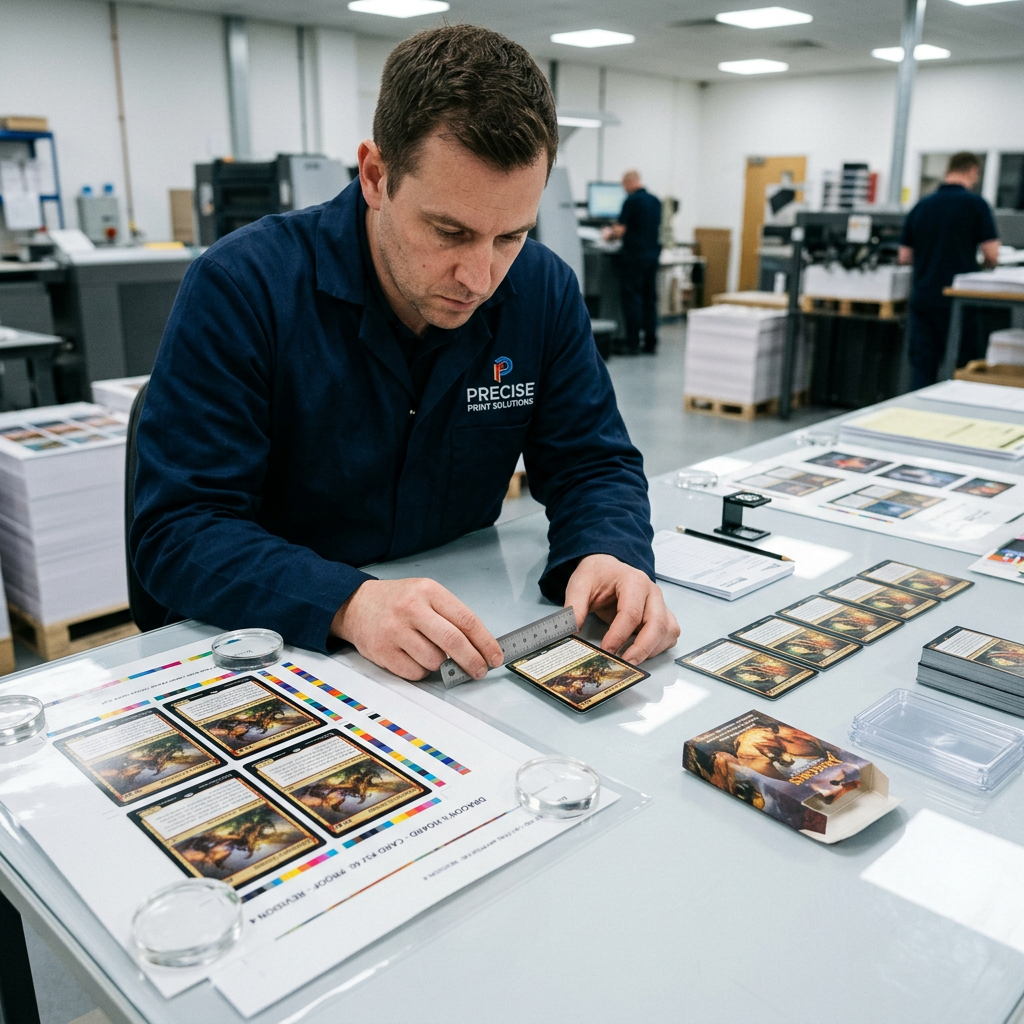
Sampling reduces uncertainty, but buyers must understand what each sample is intended to prove. A digital proof mainly checks content, layout, sequence, and general positioning. It does not reproduce the exact physical material, surface texture, or all production effects.
A physical prototype can help check dimensions, structure, card count, packaging fit, and handling. Depending on how it is produced, its color and finish may still differ from mass production. A production-method sample is more representative but can require additional setup and time. The factory should explain which features are representative and which are approximate.
Before approval, review:
- Spelling, numbers, symbols, and legal text
- Card sequence and the relationship between fronts and backs
- Trim, bleed, safe margins, and corner radius
- Images, fonts, line widths, and barcode dimensions
- Finish locations and registration expectations
- Material, thickness, surface feel, and opacity
- Packaging dimensions, inserts, labels, and assortment
Approval records should identify the final artwork version and approved specification. If changes are made after approval, the buyer and manufacturer should document their effect on cost, tooling, production scheduling, and lead time.
Bulk Production Workflow
A controlled bulk order generally follows a defined sequence rather than moving directly from quotation to printing:
- Requirement review: The factory checks dimensions, materials, quantity, finishes, packaging, and delivery information.
- Artwork preflight: Files are reviewed for format, resolution, bleed, fonts, color setup, and production compatibility.
- Quotation and specification confirmation: The parties confirm scope, commercial terms, and applicable tolerances.
- Sampling: The agreed proof or sample is prepared and reviewed.
- Approval: Final artwork, physical specifications, packaging, and any approved reference are recorded.
- Material and production preparation: Materials, plates, dies, or other required tools are arranged.
- Printing and finishing: Cards are printed, coated or laminated where required, cut, collated, and packed.
- Inspection: The factory checks production against approved requirements.
- Export packing and shipping: Finished goods are carton-packed, marked, documented, and dispatched under the agreed shipping arrangement.
Lead time should be discussed as a sequence: artwork preparation, sample production, buyer approval, material preparation, bulk manufacturing, inspection, and transport. Delayed approvals or specification changes can affect the schedule. Buyers interested in production background can review the card printing factory and manufacturing experience.
Quality Control for Custom Printed Cards
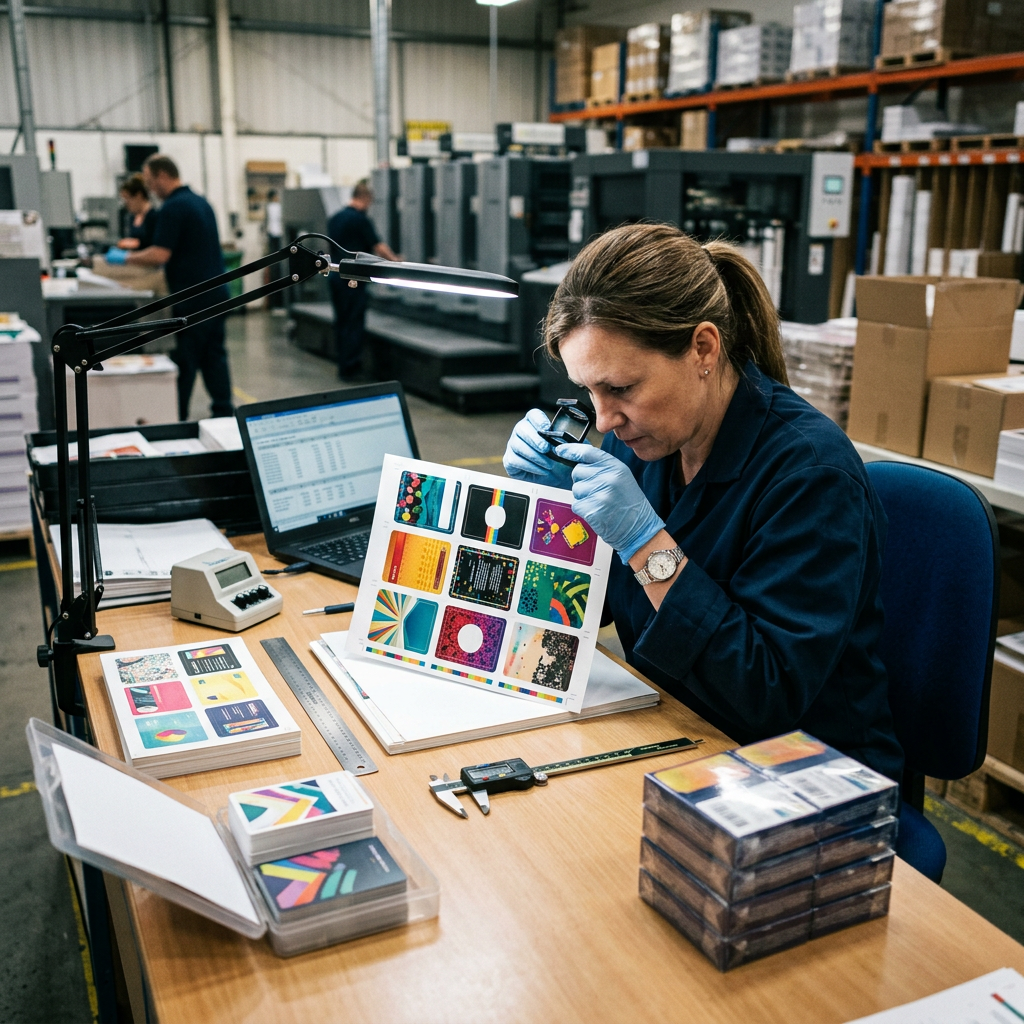
Quality control should connect the approved specification to measurable production checks. Visual approval alone is not enough when the order also depends on size, thickness, card count, finishing position, packing quantity, and carton condition.
YBJ Cards Printing applies a seven-stage quality control workflow. Depending on the project, control points cover incoming material verification, prepress review, first-output checks, in-process inspection, finishing and cutting checks, final product inspection, and packing verification.
Typical items to inspect include:
- Finished dimensions, corner radius, and cutting position
- Material identity, thickness, and surface treatment
- Print content, color consistency, and registration
- Scratches, marks, contamination, delamination, or visible defects
- Foil, spot finish, or embossed area placement
- Card sequence, count, assortment, and orientation
- Box construction, labels, barcodes, and inserts
- Units per inner pack and master carton
- Carton markings, protection, and shipping readiness
Some variation is inherent in commercial manufacturing. Buyers should identify critical requirements and acceptable tolerances before production, especially for tightly aligned borders, matching components, specialty finishes, and repeat orders. More information is available in the factory’s card printing quality control process.
Packaging and International Shipping
Packaging has two functions: presenting or organizing the product and protecting it during storage and transport. Buyers should specify both retail packaging and export packing rather than assuming that one automatically defines the other.
Individual packing may include a tuck box, rigid box, pouch, paper band, shrink wrap, insert, or another project-appropriate format. The selection depends on card count, deck thickness, presentation goals, handling, and budget. Master carton planning should consider carton dimensions, gross weight, stacking, internal movement, moisture exposure, and warehouse handling.
Before shipment, confirm:
- Cards and sets per retail pack, inner pack, and master carton
- Protective wrapping, dividers, or cushioning
- Barcode, label, lot identification, and shipping marks
- Carton dimensions, carton count, net weight, and gross weight
- Pallet requirements, if applicable
- Shipping method, destination, and agreed trade terms
- Required commercial and packing documents
Air, courier, rail, sea, and multimodal options differ in transit profile, capacity, cost structure, and handling. Freight suitability depends on order volume, weight, destination, required arrival window, and buyer arrangements. Import duties, taxes, customs procedures, and local delivery should be clarified with the relevant logistics providers or import professionals. Buyers can also review custom card packaging options during specification development.
Questions to Ask a Potential Supplier
Clear questions reveal whether a supplier understands the project and can communicate practical limitations. Ask:
- Which material and thickness suit the intended card use, and why?
- Which artwork requirements apply to bleed, safe area, fonts, color, and finishing layers?
- What sample type is recommended, and which production features will it represent?
- What is the MOQ for this exact construction and packaging format?
- Which costs are included or excluded from the quotation?
- Which tolerances apply to cutting, color, registration, finish placement, and quantity?
- How are unique cards collated and checked?
- What inspection stages are used, and what approval records are retained?
- How will cards be individually packed and protected for export?
- What information is needed to estimate production and shipping lead time?
- How are repeat orders controlled when materials or artwork versions change?
A capable manufacturer should explain trade-offs rather than recommend every available feature. Written answers also make it easier to compare suppliers on the same specification instead of comparing incomplete headline prices.
Choosing a Custom Card Printing Manufacturer
Choosing a custom card printing manufacturer requires a review of more than print quality. B2B buyers should assess specification support, artwork review, sample suitability, material knowledge, process control, inspection, packaging, communication, and shipping preparation.
The most reliable purchasing process begins with a complete specification and ends with documented approval and packing requirements. Confirm what the sample represents, identify critical tolerances, and make sure quotations are based on the same card count, material, finishes, packaging, and delivery scope.
Specifications, MOQ, price, and lead time depend on project requirements. Providing complete information early helps the manufacturer recommend a practical production route and identify technical or commercial trade-offs before bulk production begins.
FAQs
What information does a custom card printing manufacturer need for a quote?
Provide the card type, finished size, shape, material, thickness, number of unique designs, cards per set, total quantity, printing requirements, finishes, packaging, destination, and preferred shipping terms. Reference images or samples can help, but measurable specifications are still necessary.
What is the typical MOQ for custom card printing?
There is no single MOQ for every card project. The minimum depends on material availability, printing setup, tooling, finishing, collation, and packaging. A manufacturer must review the complete specification before confirming the applicable MOQ.
Should B2B buyers order a physical sample before bulk production?
A physical sample is useful when material, thickness, handling, structure, finish, or packaging fit matters. Buyers should ask how the sample will be produced and which characteristics will accurately represent bulk manufacturing. Digital proofs remain important for checking content and layout.
How can buyers control color consistency on repeat card orders?
Retain approved artwork, specifications, color references, material details, and physical samples where appropriate. Repeat orders should identify the previous order and note any changed materials or processes. Some commercial printing variation can occur, so critical color expectations should be discussed before production.
How long does custom card production take?
Lead time depends on artwork readiness, sampling, approval speed, material availability, quantity, finishing complexity, packaging, inspection, and shipping method. Buyers should request a project-specific schedule covering each stage rather than relying on a general production estimate.
Discuss Your Custom Card Project
“Share your card type, size, material, quantity, finish, and packaging requirements, and YBJ Cards Printing can review the project and provide a tailored manufacturing recommendation and quote.”
Tags
Keep Reading
Related Articles
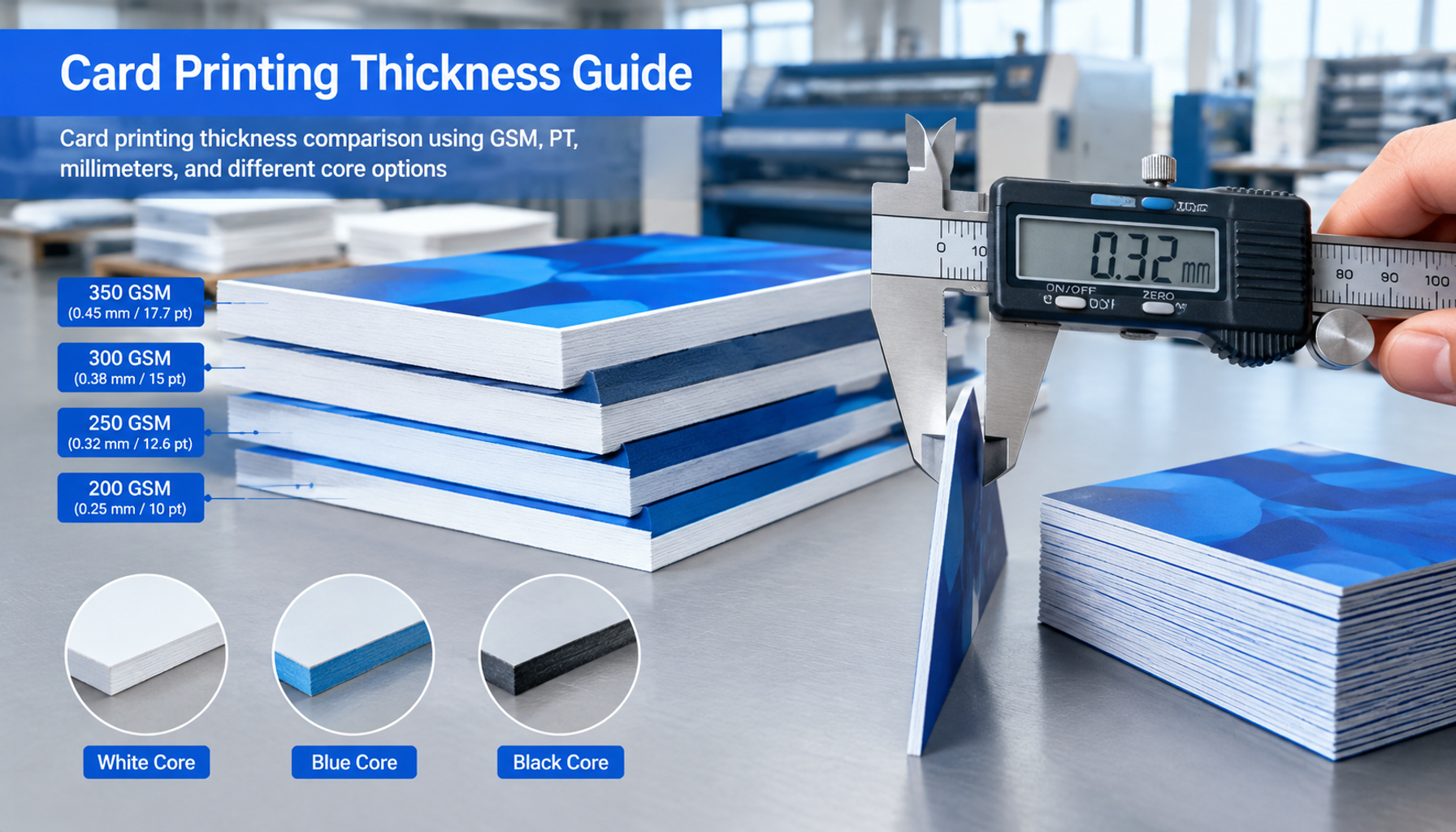
Card Printing Thickness: GSM, PT, and Core Selection Guide
A practical B2B guide to comparing GSM, PT, millimeters, paperboard cores, and plastic constructions when specifying custom cards.
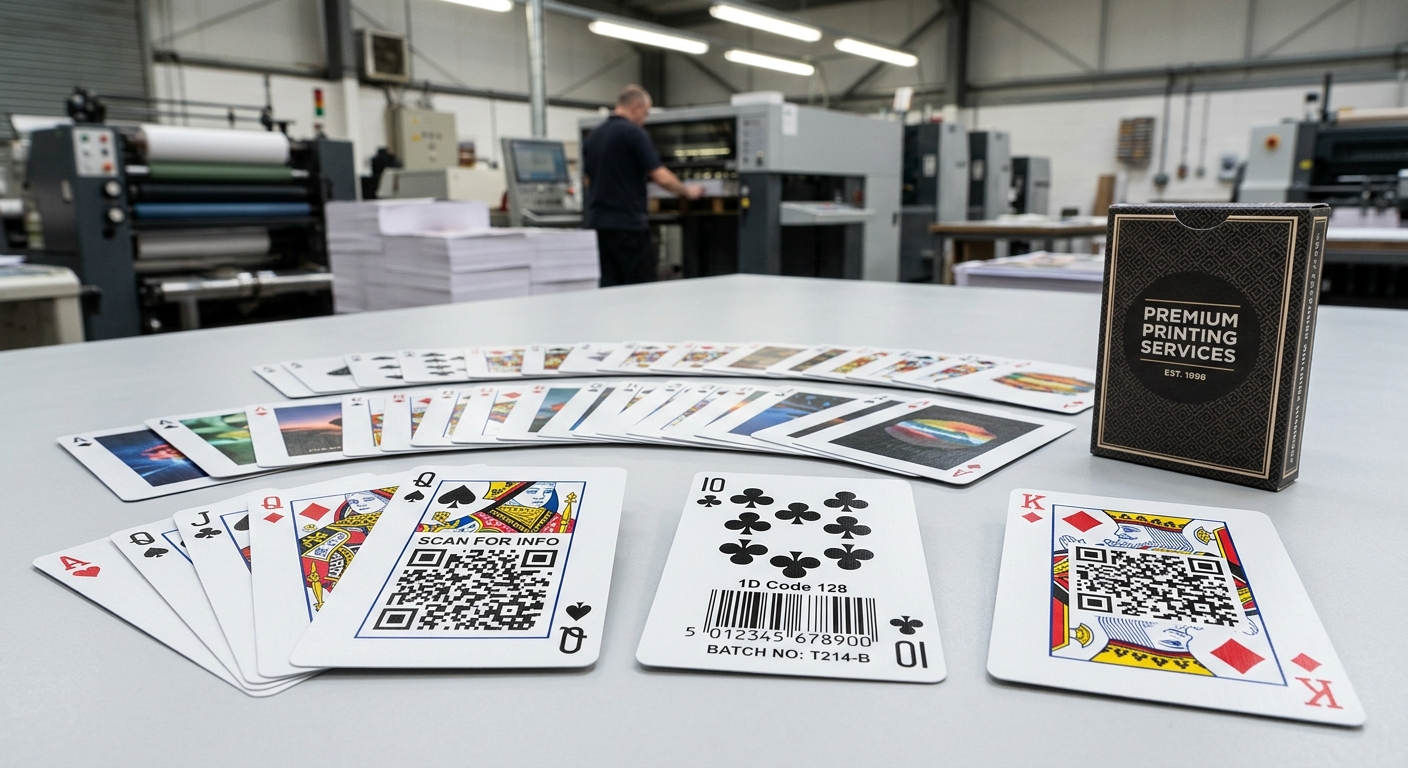
How to Print Custom Cards with QR Codes and Barcodes in a Deck
Printing scannable codes on a custom card deck requires coordination between code generation, database management, artwork preparation, print production, finishing, and scan testing. This practical guide explains how B2B buyers can prepare reliable QR codes and barcodes for static or variable-data card decks.
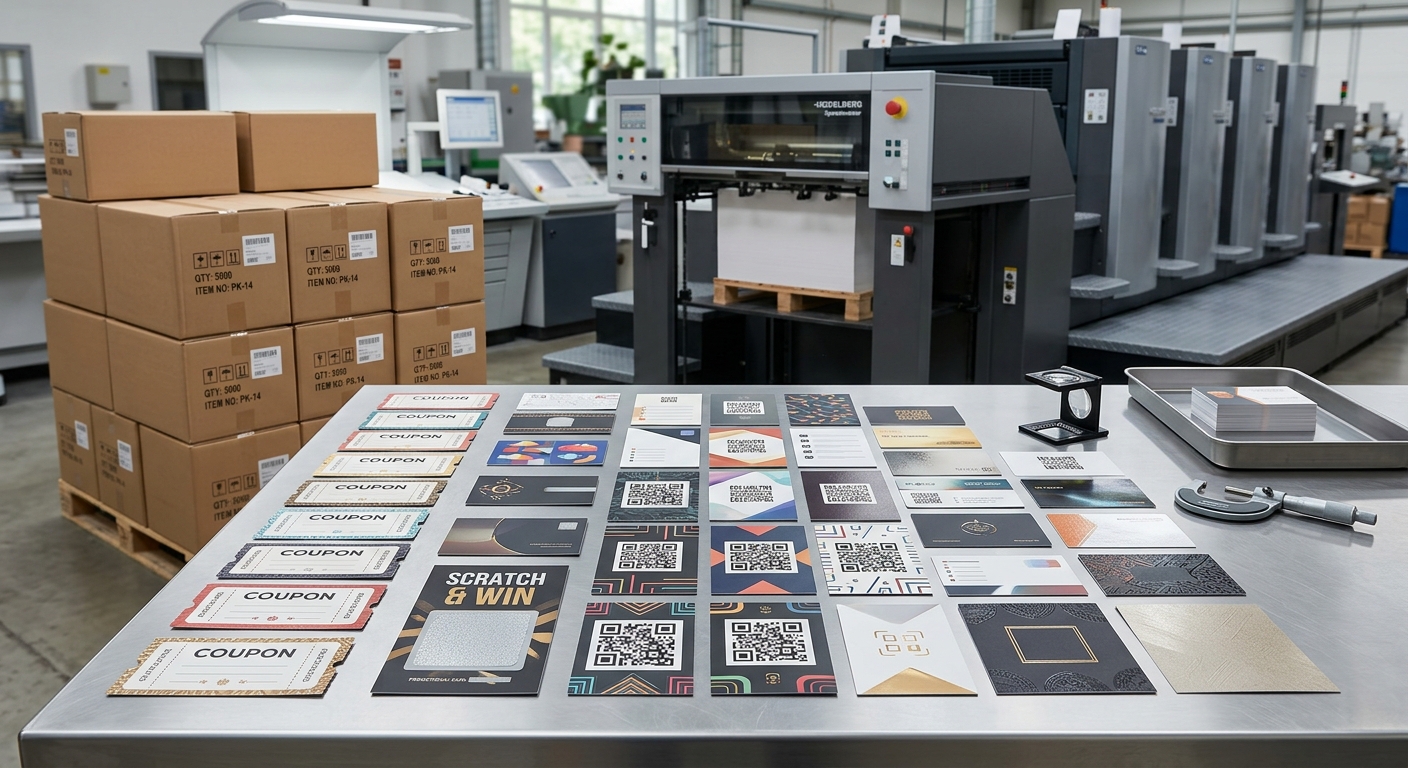
Custom Promotional Card Printing for Marketing Campaigns: Formats and Production Tips
Custom promotional card printing helps brands deliver compact, measurable marketing materials for launches, retail promotions, events, loyalty programs, and direct-mail campaigns. The best result depends on matching the card format, material, finish, artwork, quantity, and packaging to the campaign objective.
Fast Quote Support
Ready to Start Your Custom Card Project?
Send us your product type, size, material, quantity, and packaging requirements. Our team will reply within 24 hours with production suggestions, sampling options, and a competitive quote. No setup fees.